
[POST]
How to Choose the Right Laboratory Crusher for Your Sample Size in 2026
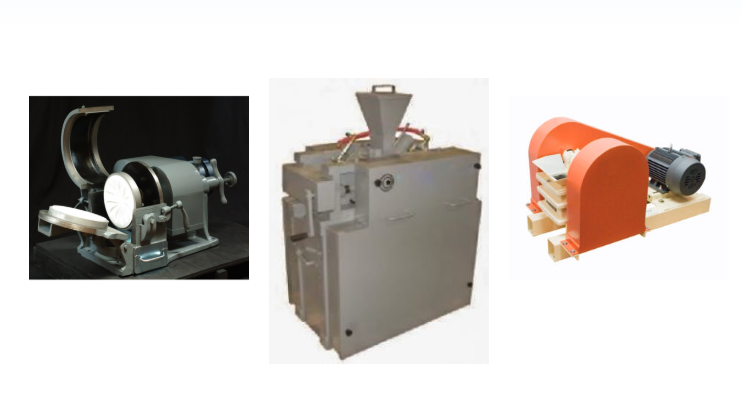
Choosing the correct laboratory crusher is one of the most important steps in accurate mineral and material testing. Sample size, material hardness, and desired final particle size all directly affect test results. ASTM sample preparation standards and university laboratory guidelines consistently emphasize that improper sample reduction can introduce bias, contamination, or inconsistent data. This guide explains how to select the right laboratory crusher based on sample size and testing requirements.
Why Sample Size Matters
Laboratory crushers are designed to reduce material while preserving sample representativeness. According to ASTM guidelines and academic lab procedures, oversized feed material can lead to poor reduction efficiency, excessive wear, or uneven particle size distribution. Using equipment that is too small can also reduce throughput and compromise results.
Key factors influenced by sample size include:
• Feed opening capacity
• Reduction ratio
• Throughput and efficiency
• Particle size consistency
• Equipment wear and maintenance frequency
Understanding these factors helps ensure reliable downstream testing such as flotation, grinding, or chemical analysis.
Jaw Crushers for Large and Coarse Samples
Laboratory jaw crushers are commonly used for primary size reduction. They are well suited for larger, harder samples that need to be reduced efficiently before secondary processing.
Best used when:
• Initial sample size is large or irregular
• Material is hard or abrasive
• A coarse but consistent output is acceptable
Sepor laboratory jaw crushers are widely used in mining, geology, and university laboratories for initial sample preparation.
View product: https://www.sepor.com/product-category/crushers/jaw-crushers/
Roll Crushers for Controlled Intermediate Reduction
Laboratory roll crushers provide controlled, intermediate crushing with improved particle size uniformity. Compared to jaw crushers, roll crushers typically generate fewer fines and allow for tighter size control.
Best used when:
• Feed material has already been pre-crushed
• Uniform particle size is required
• Reduced fines are important for testing accuracy
Sepor roll crushers are often selected for mineral processing applications where consistency and repeatability are critical.
View product: https://www.sepor.com/product-category/crushers/roll-crushers/
Pulverizers for Fine Sample Preparation
Sepor Pulverizers are used for fine grinding when samples must be reduced to powder form. This stage is essential for chemical analysis, XRF testing, and metallurgical evaluations that require precise particle size distribution.
Best used when:
• Fine or powdered samples are required
• High repeatability is critical
• Laboratory standards specify final particle size
Sepor laboratory pulverizers are designed for efficient, repeatable fine grinding across a wide range of materials.
View product: https://www.sepor.com/product-category/grinding/pulverizers/
Using a Staged Crushing Approach
Laboratory best practices recommend reducing sample size in stages rather than attempting to reach the final size in a single step. Large samples are first reduced using a jaw crusher, followed by roll crushing or pulverizing as needed. This approach improves consistency, protects equipment, and preserves the integrity of the sample.
Following proper equipment selection helps:
• Maintain representative samples
• Reduce preparation errors
• Improve test repeatability
• Extend equipment lifespan
Conclusion
Selecting the right laboratory crusher begins with understanding your sample size and testing goals. Jaw crushers are ideal for large, coarse samples, roll crushers provide controlled intermediate reduction, and pulverizers deliver fine, consistent material for analytical testing. By following established laboratory standards and best practices, reliable and repeatable results can be achieved.
Sepor offers a complete range of laboratory crushing and sample preparation equipment designed to support standards-based testing in mining, geology, and industrial laboratories.
References & Further Reading
-
911 Metallurgist – Laboratory Sample Preparation
https://www.911metallurgist.com/blog/laboratory-sample-preparation/ -
McLanahan – Types of Crushers in Sampling Applications
https://www.mclanahan.com/blog/types-of-crushers-in-sampling-applications -
Purdue University – Mineral Separation Laboratory: Crushing & Sieving
https://www.physics.purdue.edu/ams/labs/mineral-separation-lab/crushing-sieving.php -
U.S. Geological Survey – Rock Sample Preparation for Analysis (PDF)
https://pubs.usgs.gov/of/2002/ofr-02-0223/A1RxSampPrep_M.pdf -
ALS Global – Sample Preparation for Metallurgical Testing
https://www.alsglobal.com/en/metallurgy-and-mineral-processing/sample-preparation